Pattern of Central Financial Assistance

1.0 Research, Design and Development of Solar Thermal Technologies.

        Financial assistance for RD&D projects that involve partnership with industry should normally be restricted to 50% of the project cost.  However, for any proposal from Universities, Government research institutions etc. Ministry may provide upto 100% funding, depending on project priority. 

In case there is a request from industry for financial support in excess of the percentage indicated in para 3.1 above, the same will have to be justified on the ground that the time-horizon for technological maturity and for developing long-term competitiveness is large. 

2.0       SOLAR THERMAL ENERGY DEMONSTRATION PROGRAMME

 Solar Cooking

             a)         Concentrating Solar Cookers 

Type of Solar Cooker

Support to Users 


Service Charges to SNAs

Dish solar cooker

(Diameter 1.4 m, minimum)

30% of   total cost, limited to Rs.1500/- per cooker.

Rs. 250 per cooker

Community solar cooker for indoor cooking

(Aperture area 7 sq. m., minimum)

30% of eligible capital cost, limited to Rs.15000/- per cooker

Rs. 2,500 per cooker

 b)         Incentives to State Nodal Agencies (SNAs) and associated
              promoters for sale of solar cookers
 

Types of solar cooker sold

Incentive per cooker to SNAs if the sale is made through their own outlets

(Rs.)

Incentive per cooker if the sale made by SNAs is through their associated promoters (Rs.)

SNAs


Associated promoters

ISI marked box solar cooker

200

100

100

Non-ISI box solar cooker but approved by SEC/RTCs

100

50

50

c) Support to undertake promotional activities to increase sale of solar cookers  

Support may be provided to reputed NGOs, Universities, Institutions, Regional Test Centres, etc. up to a maximum of Rs.1.50 lakhs, towards organization of promotional activities like publicity, cooking demonstrations/competitions, seminars/ workshops, evaluation studies, development of improved models, etc. on solar cookers based on specific proposal received from them in the prescribed format.

       d)   Support to Manufacturers for taking ISI mark

      Reimbursement of BIS fee (including application and marking fee and test charges) may be made directly by MNRE on 50% basis during the year on submission of approval certificate and copies of necessary bills/receipts issued by BIS.             

 Special Demonstration and Pilot Projects

             The MNRE share will be restricted to 50% of the ELIGIBLE cost of the system.   

Demonstration Scheme for North-East, Islands, J&K and Sikkim

  1.  For Islands and J&K: Support is provided up to the extent of Rs. 4,000 per sq. m. of the installed collector area.

  2. For the states of North-East & Sikkim: Support is provided up to the extent of Rs. 6,000 per sq.m. of the installed collector area.

  3.  The rest of the cost of the system will be borne by the beneficiary through his contribution, loans or state contribution.  The contribution of the Ministry will be restricted to 50% of the cost of the system. 

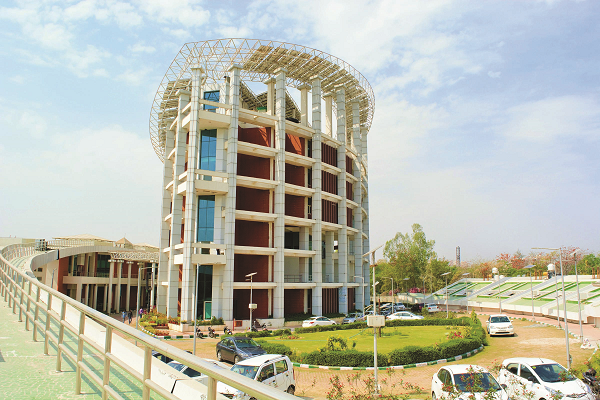
 Solar Buildings Programme

  Training & Education

            Available financial assistance for organizing Workshops and Seminars and Orientation Courses for creating awareness, generating public interest and providing inputs about the technology is as follows.


National / Model workshop / orientation course

Rs. 2,00,000

Seminar / workshop of one day duration

Rs.40,000

Workshop / orientation course of 2 day duration

Rs.65,000

Refresher / orientation course of 3 day duration

Rs.80,000

A session in a major conference           

Rs.50,000

 Demonstration Programme

                Partial financial assistance is available to government and semi-government organizations through State Nodal Agencies to i) support preparation of detailed project reports (DPRs), and ii) construction of solar buildings.  The non-governmental institutional buildings, which would be able to serve the purpose of demonstration effectively, may also be supported under this programme. Commercial undertakings are not eligible for assistance.   

Preparation of Detailed Project Reports (DPRs)  

            50% of the cost of DPR for a building designed on the basis of the principles of solar passive architecture or 1.5% of the estimated cost of the building with a maximum of Rs.1,00,000 for each project.

      Construction of Solar Buildings

    Support will be limited to 10% of the cost of the building with a maximum of Rs. 10.0 lakh for each project. 

        Promotional Programmes         

    Financial assistance is also available to suitable organizations/ institutions for compiling and publishing documents on solar buildings. 

 Service Charges

      For carrying out the above projects/activities, the SNAs / implementing organizations will be eligible for service charges amounting to 10% of the CFA being routed through them wherever no specific provision is indicated in this administrative approval in this regard.

3.0 TECHNOLOGY EVALUATION PROJECTS ON LARGE AREA SOLAR DISH CONCENTRATOR (ARUN-160) FOR INDUSTRIAL PROCESS HEAT SYSTEMS

       Irrespective of the total cost of the projects, a fixed financial support of Rs.12.0 lakhs will be provided for each ARUN-160 dish involved in a project.  The user organization will meet the balance cost of the solar system, and the cost of integration of solar system with the existing system, cost of AMC, etc.

        The projects sanctioned to private sector organizations shall not be entitled to grant / support from any other government organization. 

        The release of funds will be made on reimbursement basis to the user industry after submission of i) a completion report along with a month’s data on the performance ii) statement of total expenditure, and iii) joint inspection report from the user organization, M/s. CDPL, MNRE and the concerned state nodal agency (SNA).     

       For implementation of these projects, the SNAs will be eligible for service charges amounting to 2% of the CFA, which will be released at the time of release of CFA to the user industry