
The Wind Resource Assessment Programme which is being coordinated by
the Centre for Wind Energy Technology (C-WET) has so far covered 31
States and Union Territories involving establishment of about 627 wind
monitoring stations. The cost of setting up a wind
monitoring station is shared between Central and State Governments
in ratio of 80:20 whereas it is 90:10 for the North Eastern Region
and hilly States.
Ø
POTENTIAL
The
Potential for wind power generation for grid interaction has been
estimated at about 49,130 MW with 2% land
availability in potential areas for setting up wind farms in all
states except Himalyan/N-E and A&N islands. It is also based on
assumptions of land requirement @ 9 MW per square KM.
Ø
TECHNOL0GY
Two types of wind turbines namely
stall regulated and pitch regulated are being deployed in the
country and abroad for grid-interactive power. The stall regulated
wind turbines have fixed rotor blades whereas pitch regulated wind
turbines have adjustable rotor blades that change the angle of
attach depending upon wind speed. Both technologies have their own
advantages and disadvantages. Wind turbines are also available
with lattice, steel tubular and concrete tubular towers.
Ø
DEMONSTRATION
PROGRAMME
An aggregate demonstration
wind power capacity of
71 MW
has been established at 33 locations in 9 states viz., Andhra
Pradesh, Gujarat, Karnataka, Kerala, Madhya Pradesh, Maharashtra,
Rajasthan, Tamil Nadu and West Bengal. Demonstration projects are
implemented through the State Governments, State Nodal Agencies or
State Electricity Boards. Demonstration projects will be taken up
only in those states where commercial wind power projects have not
yet been initiated/taken off.
Ø
DEPLOYMENT
A total capacity of
around
15000 MW
has been established up to August, 2011, mainly in Tamil Nadu, Gujarat,
Maharashtra, Andhra Pradesh, Karnataka and Rajasthan. Wind electric
generators of unit sizes between 225 kW and 2.1 MW have been
deployed across the country. India now ranks 5th in the
world after USA, Germany, China and Spain in grid connected wind power
installations. A cumulative total of over
100 billions units of
electricity have been fed to the State Electricity Grids up to
June, 2011.
Ø
MANUFACTURING BASE OF WIND
ELECTRIC GENERATORS
Wind
Electric Generators are being manufactured in the country by a dozen
manufacturers, through (i) joint ventures under licensed production
(ii) subsidiaries of foreign companies, under licensed production
and (iii) Indian companies with their own technology. An
indigenization level up to 70% has been achieved in machines of unit
sizes up to 500 kW. The import content is somewhat higher in higher
capacity machines. The current annual production capacity of
domestic wind turbines is about 3000 MW.
Ø
GUIDELINES FOR SETTING UP
PROJECTS
The Ministry has been issuing guidelines for wind power development
since July 1995 in order to bring about balanced growth of the
sector. These guidelines relate to preparation of detailed project
reports, micro-siting, selection of wind turbine equipment,
operation & maintenance, performance evaluation, etc.
A list of manufacturers of certified wind turbine machines is issued
by C-WET on quarterly basis.
Ø
PROMOTIONAL POLICIES
A package of fiscal and financial incentives is available which
includes concessions such as 80% accelerated depreciation,
concessional custom duty on specified items, excise duty
exemption, sales tax exemption, income tax exemption for 10
years, etc. In addition,
State Electricity
Regulatory Commissions (SERCs) are determining preferential
tariffs.
Indian Renewable Energy Development Agency (IREDA) provides
loan for setting up wind power projects.
Ø
GENERATION BASED INCENTIVES (GBI) FOR WIND
POWER PROJECTS
Ø
CENTRE FOR WIND
ENERGY TECHNOLOGY (C-WET)
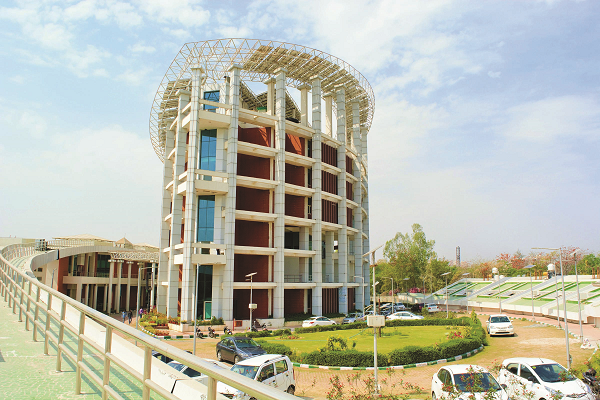
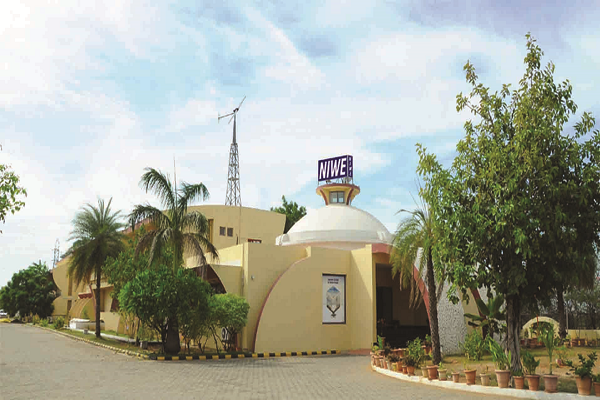
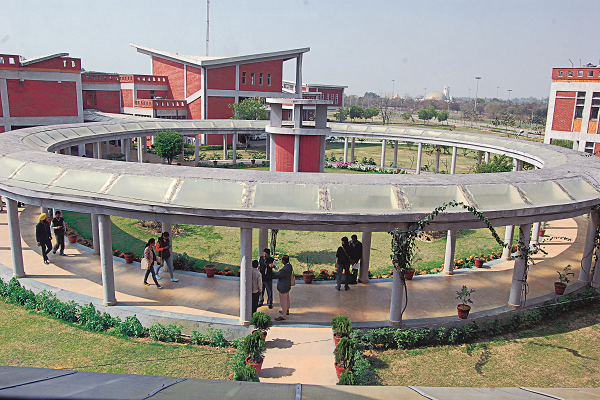
The Centre for Wind Energy Technology (C-WET), Chennai was
established in Tamil Nadu in 1998 as an autonomous institution under
the administrative control of the Ministry of New and Renewable
Energy. C-WET main activities include resource assessment and
testing & certification.